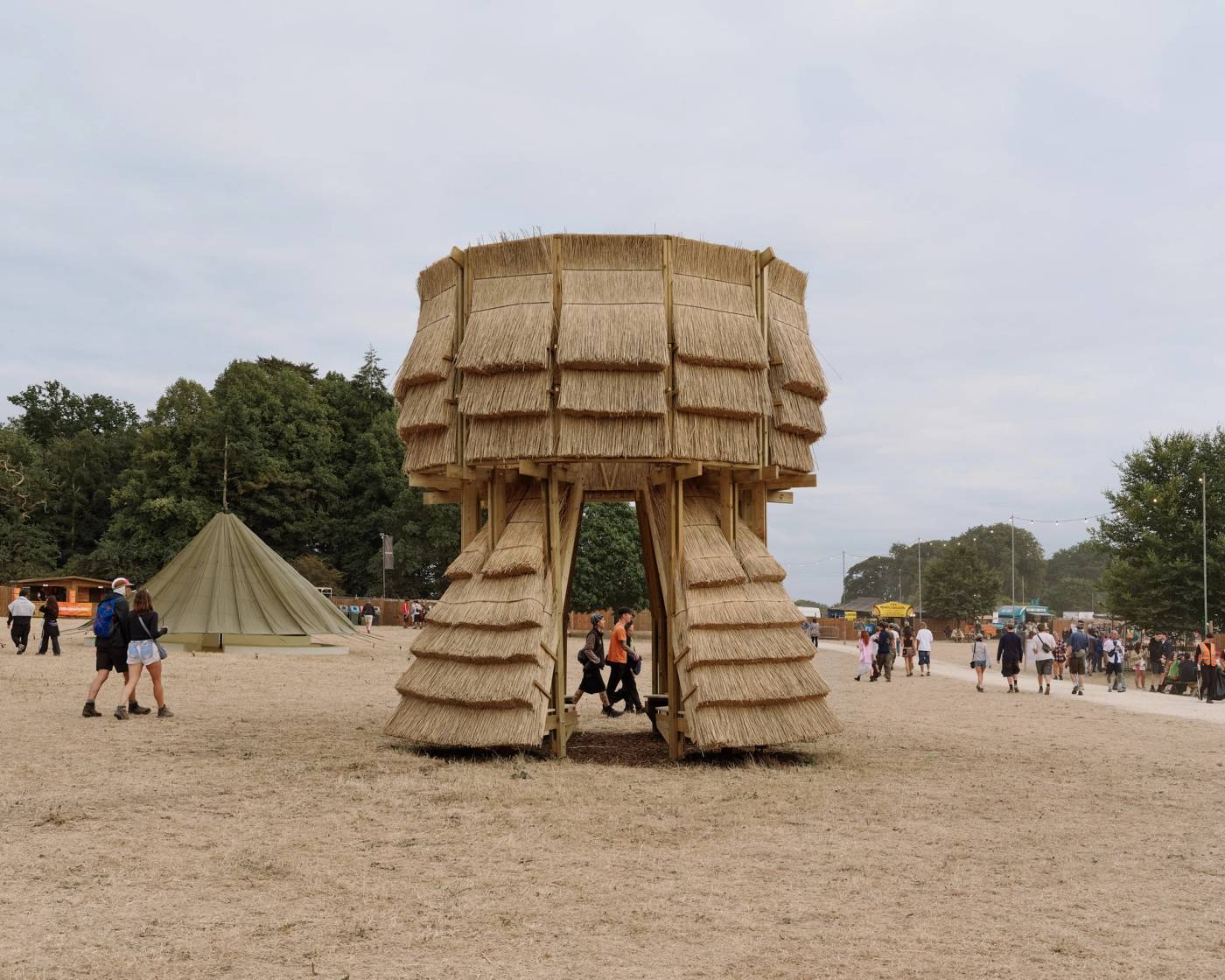
The Water Tower
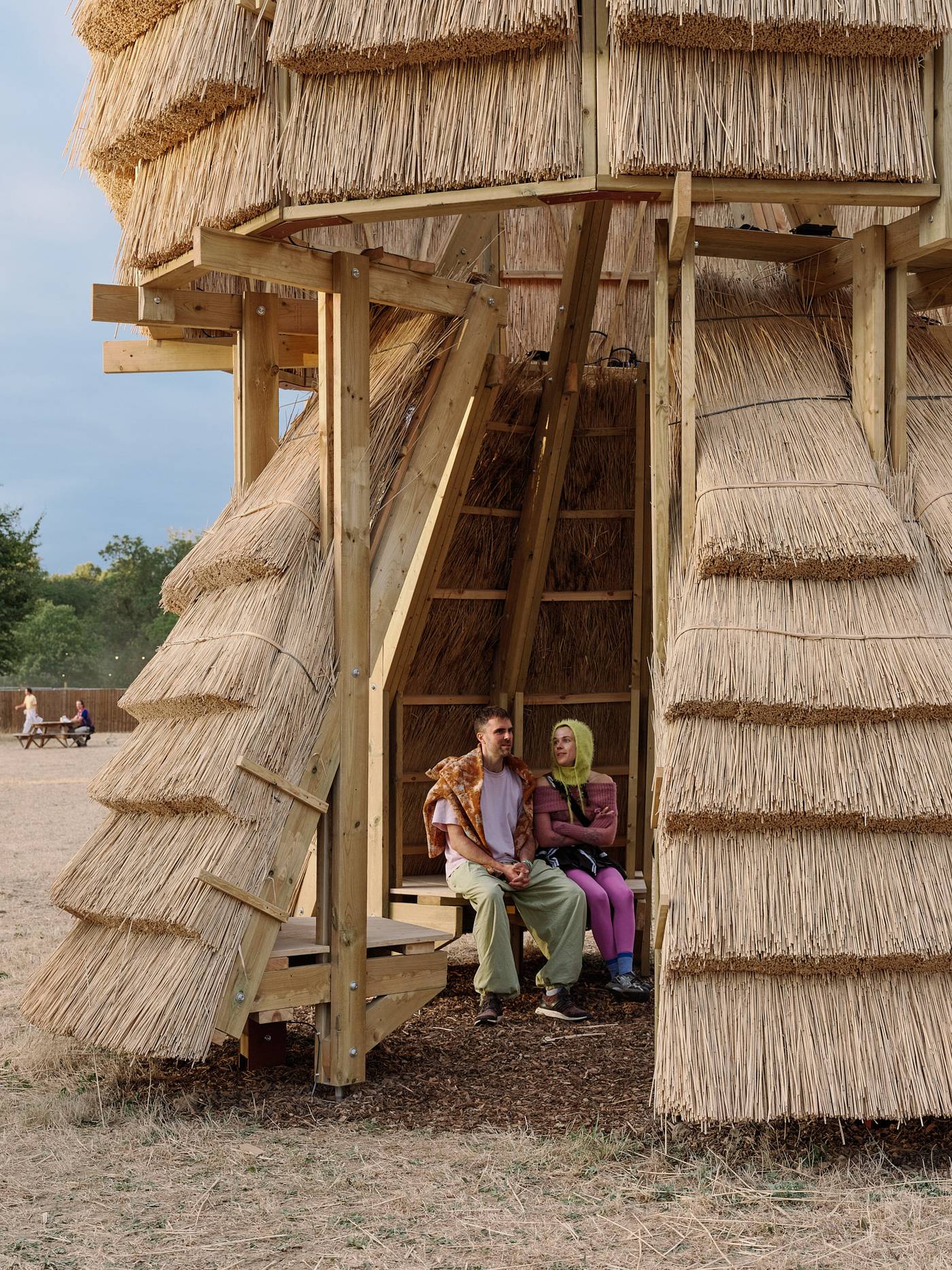
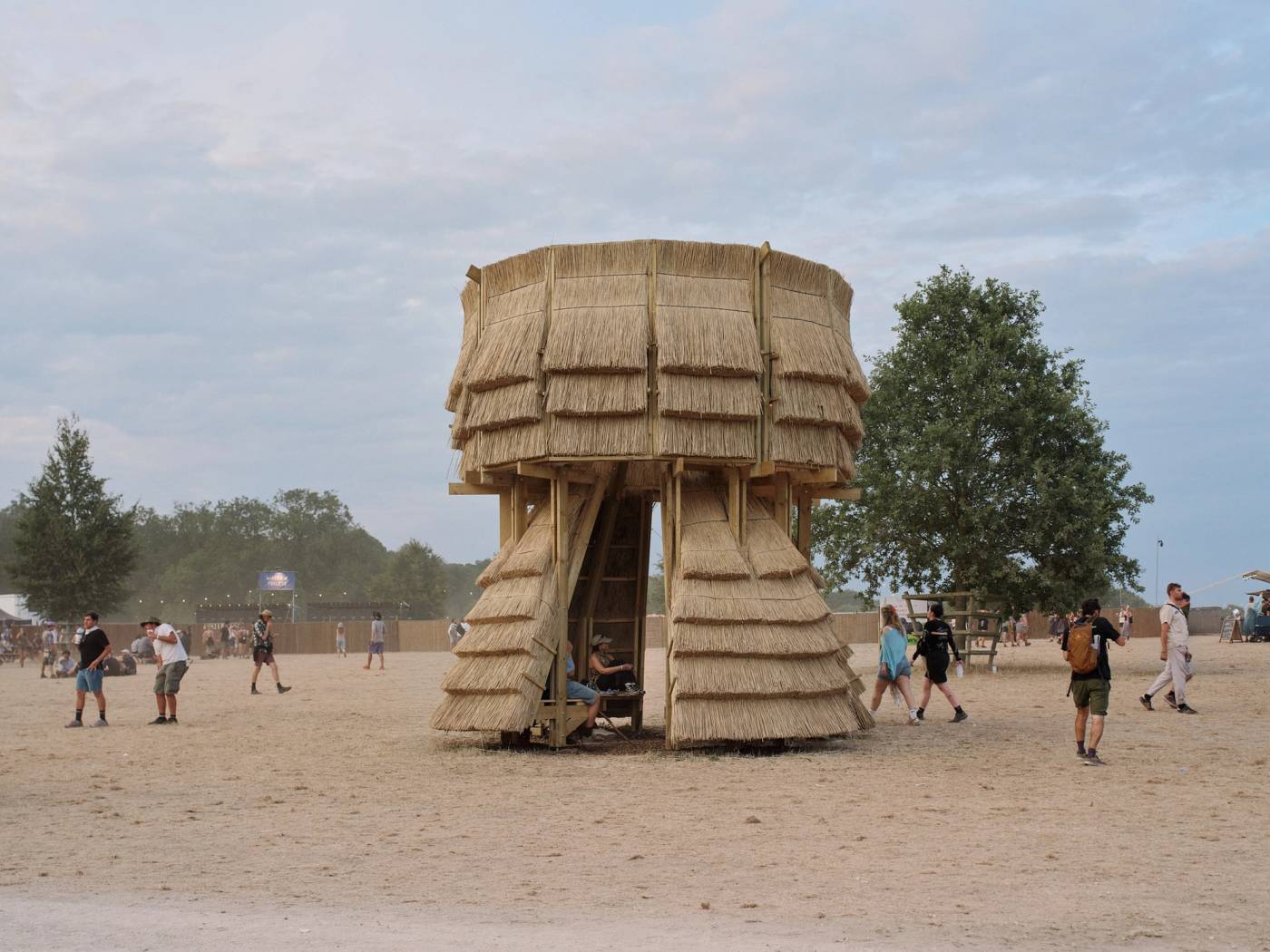

The Water Tower is a collaboration between Cella Collective and Mitre & Mondays, shaped by a shared interest in material politics and landscape systems.
A new structure for Houghton Festival built from timber and thatch, the Water Tower creates a dialogue between Norfolk's watery broads, intertidal reedbeds and the tradition of thatching that has grown from this landscape.
- System
- Bioregional, Assembly and Disassembly
- Collaborators
- Cella Collective
- Category
- Cultural
- Location
- Norfolk
- Photographer
- Henry Woide
- Client
- Houghton Festival
- Year
- 2026
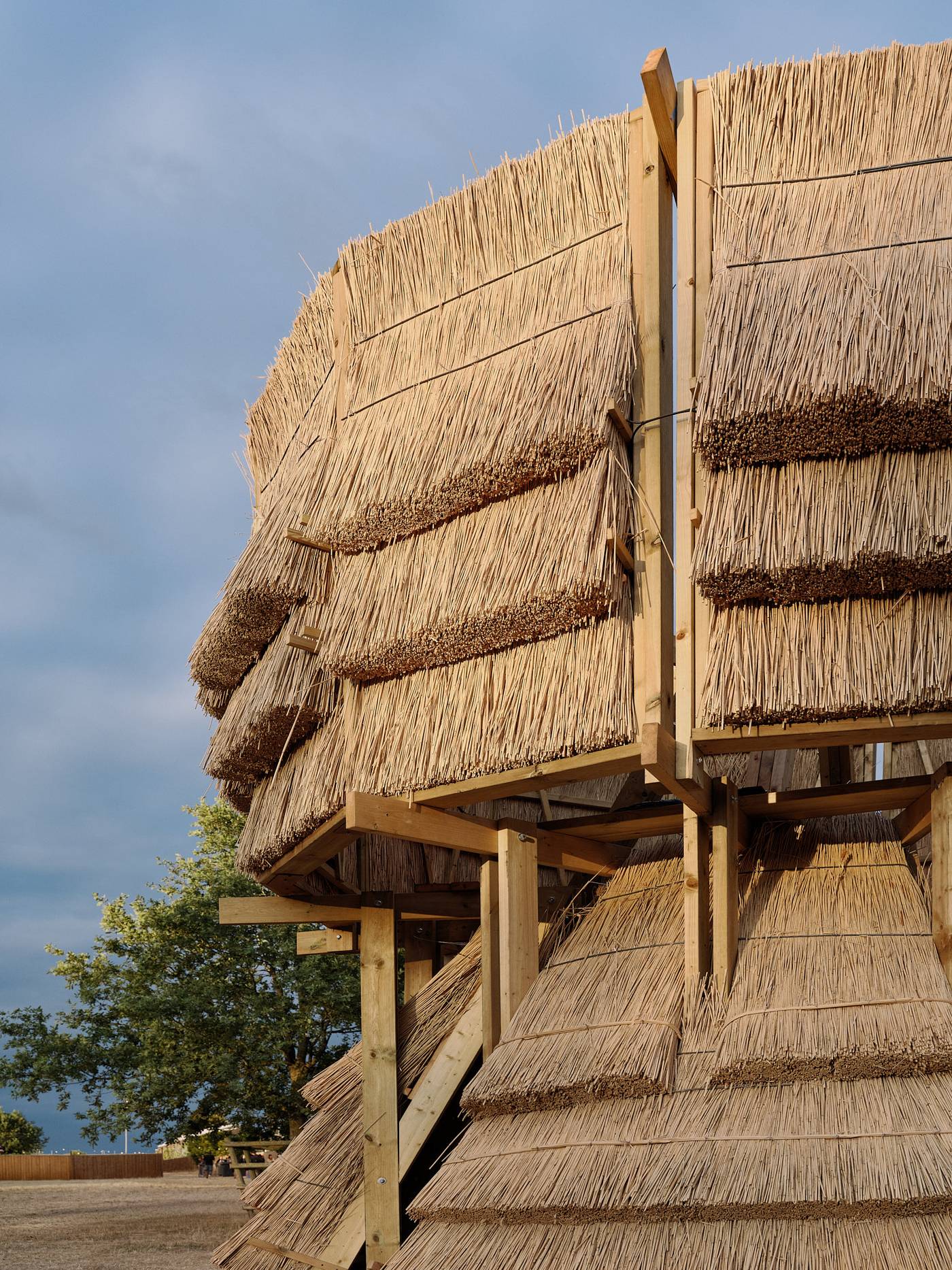
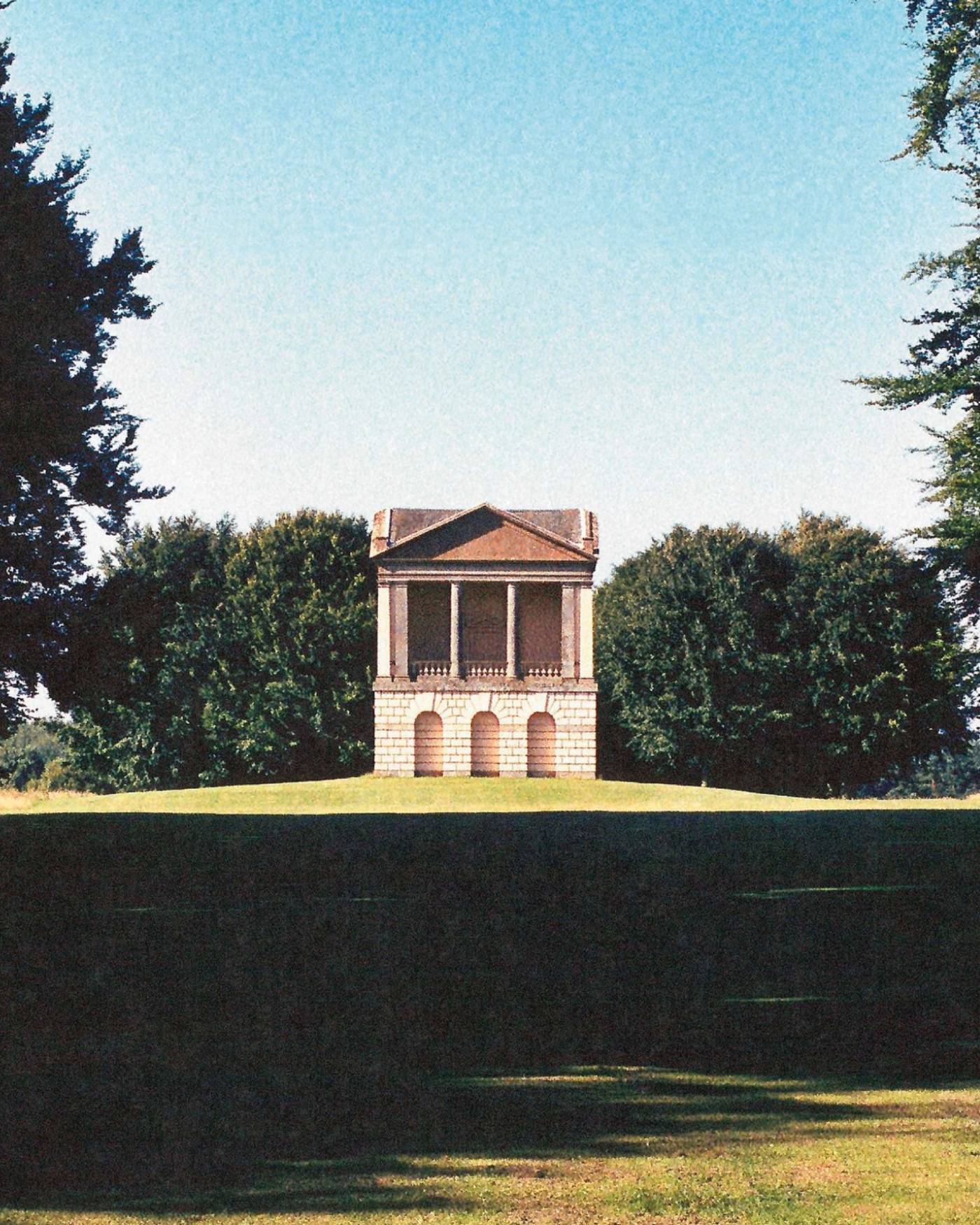
Closer to the site, the structure references the water tower, built in 1772 to service Houghton Hall, the first of its kind in the region.
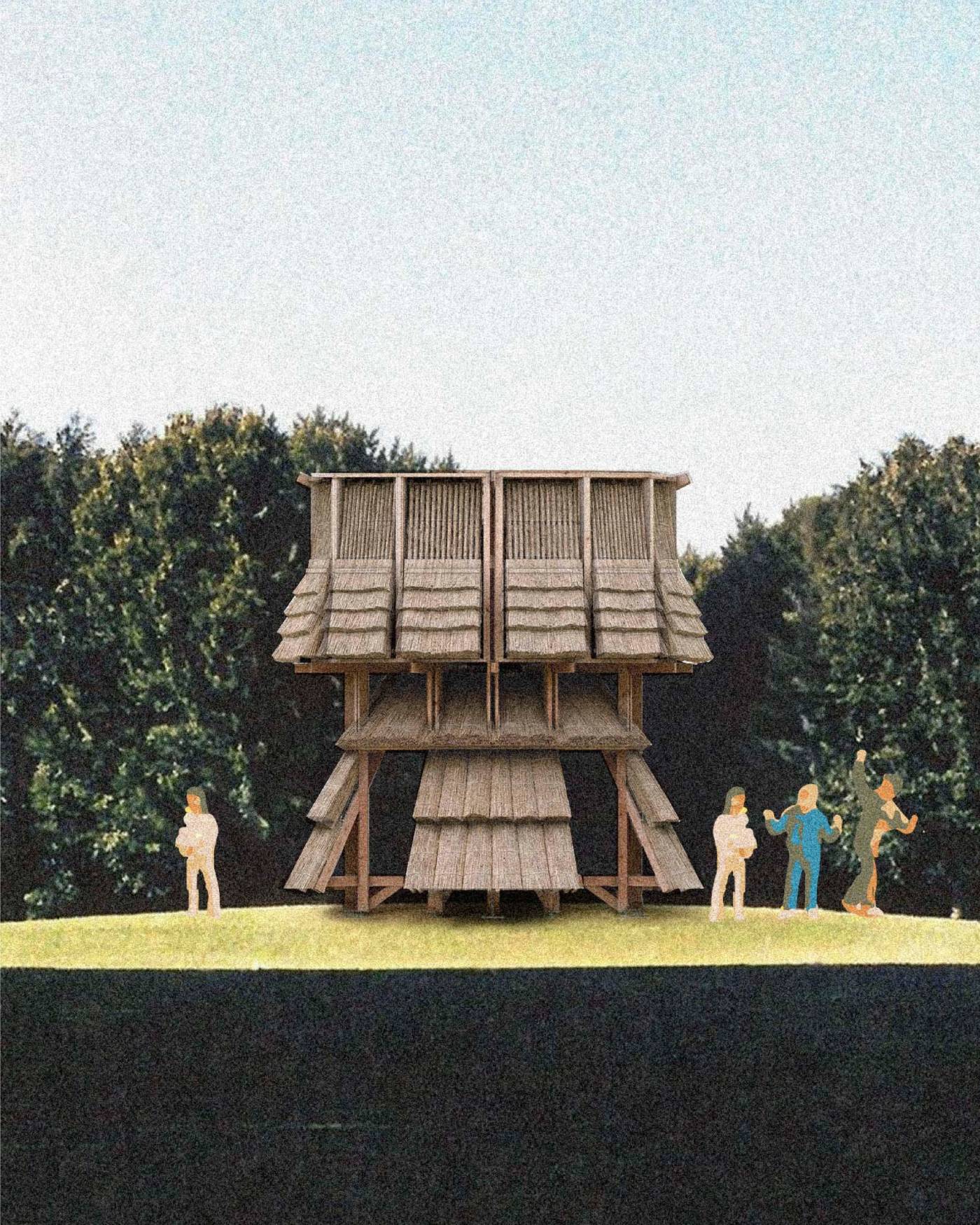
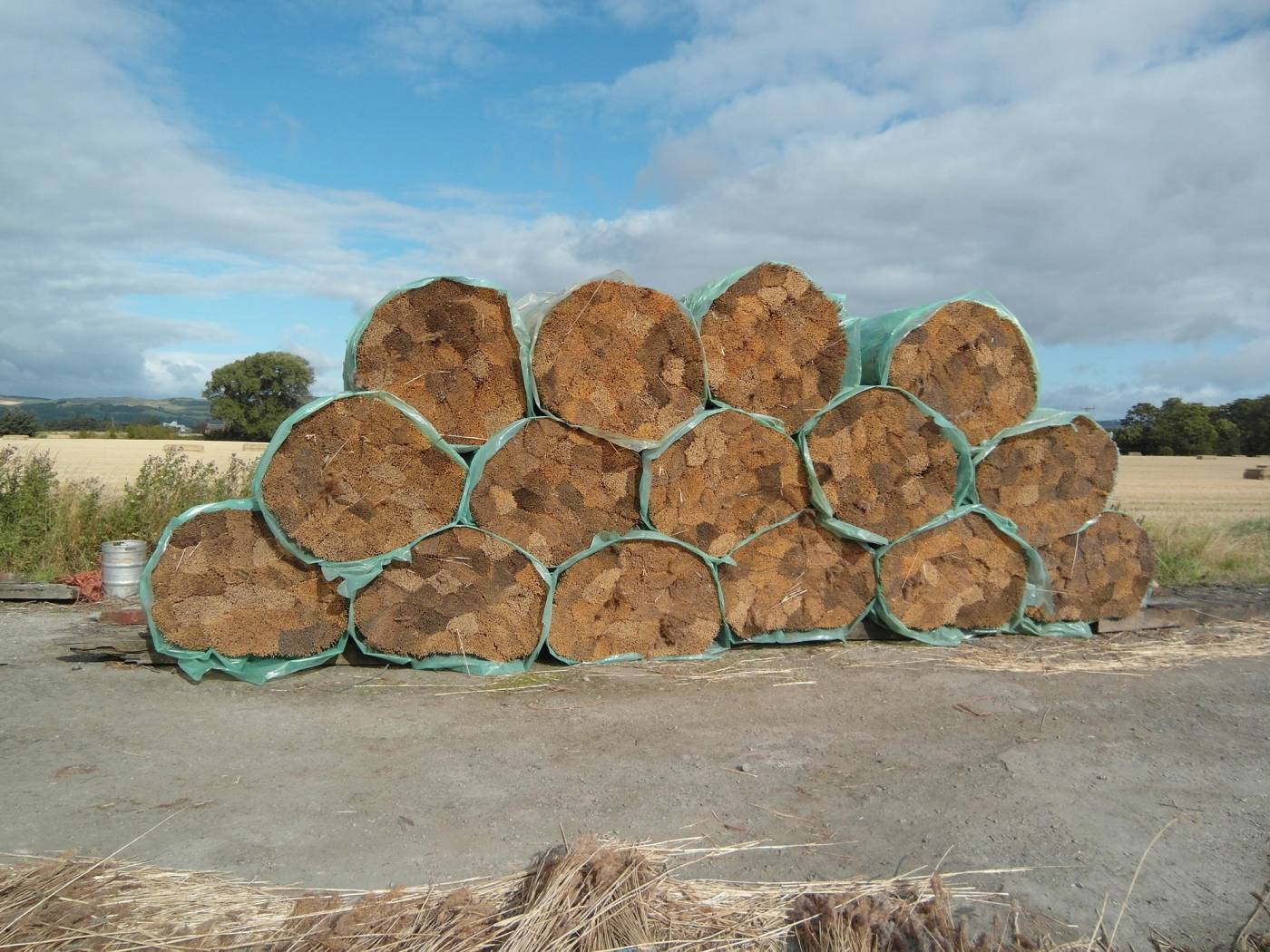

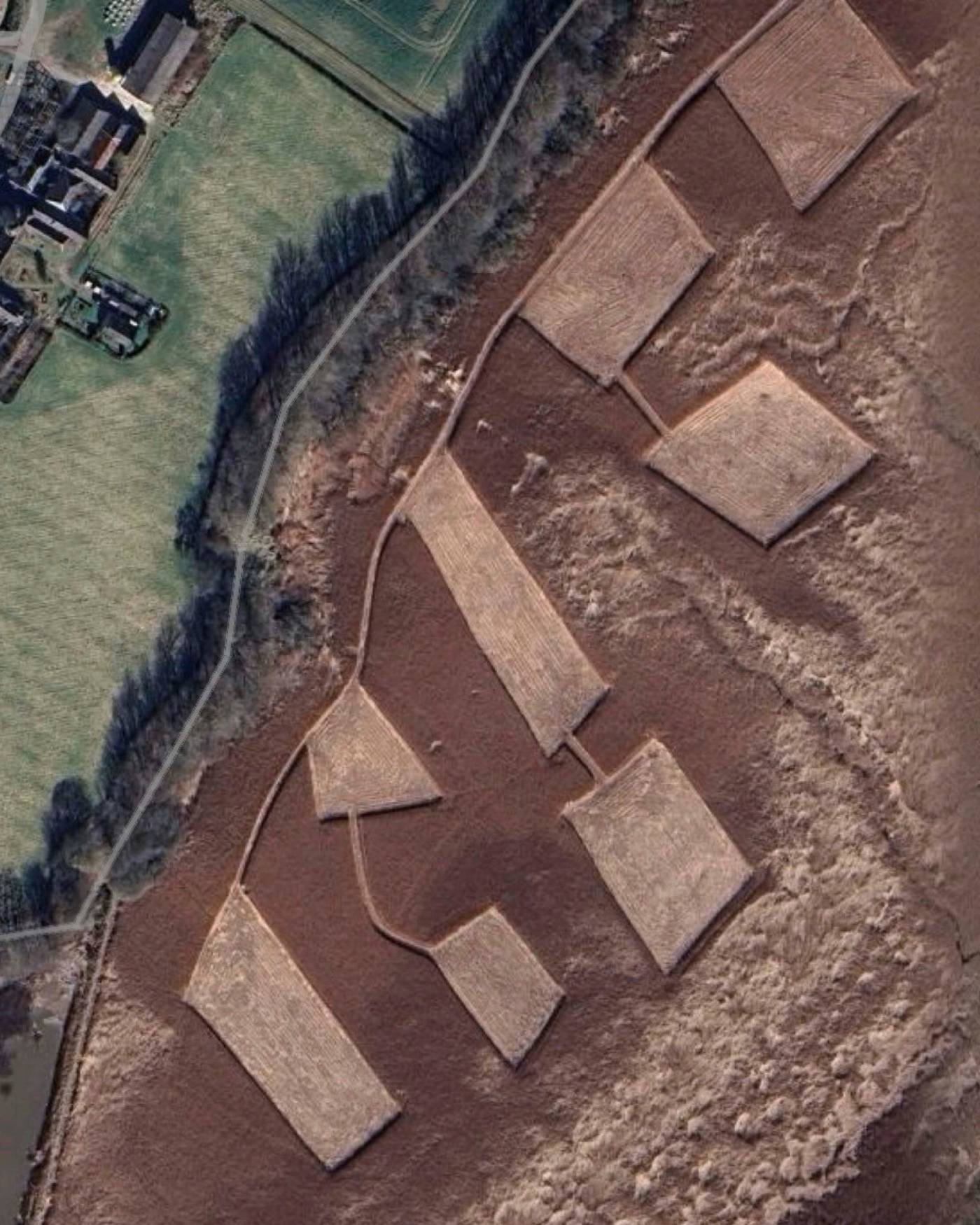
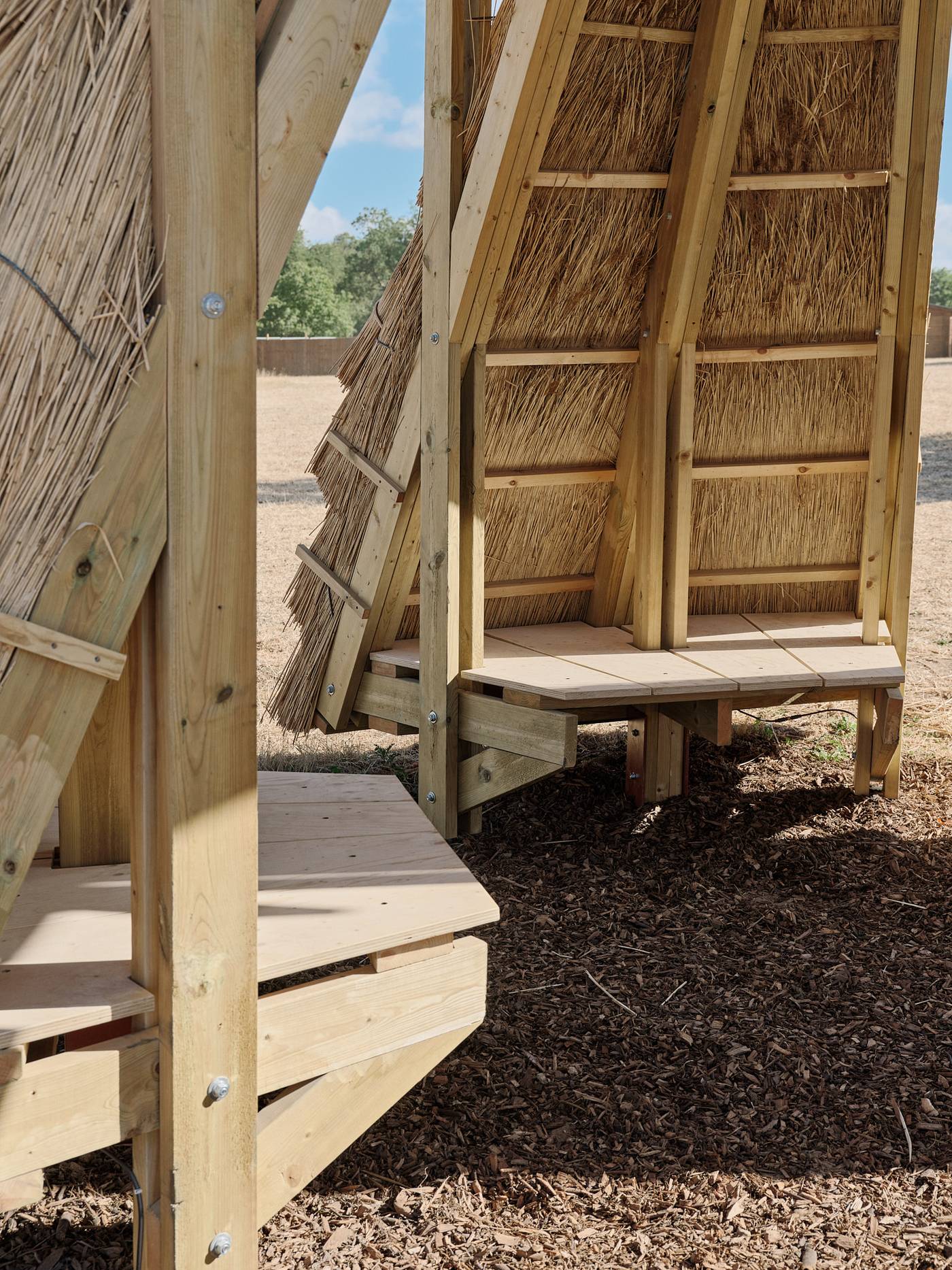
Thatched in material harvested from RSPB managed reedbeds, the Water Tower finds use for the material which recentres the need for regenerative homegrown construction materials, that, when effectively managed, supports birdlife and the health of our waterways.
What was once a habitat for Bearded Tits, Marsh Harrier and Water Rale will soon welcome you at the site's Eastern edge.
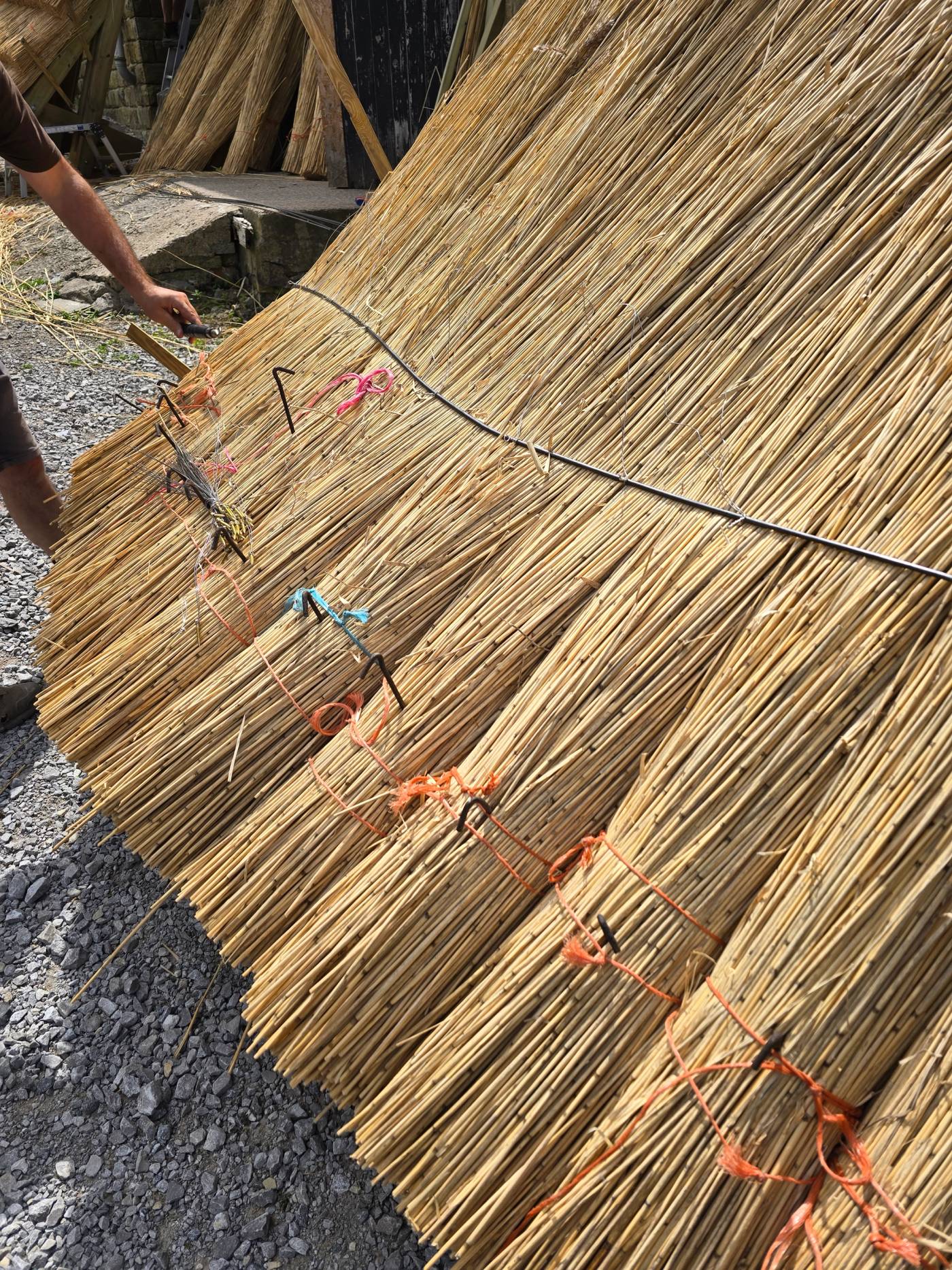
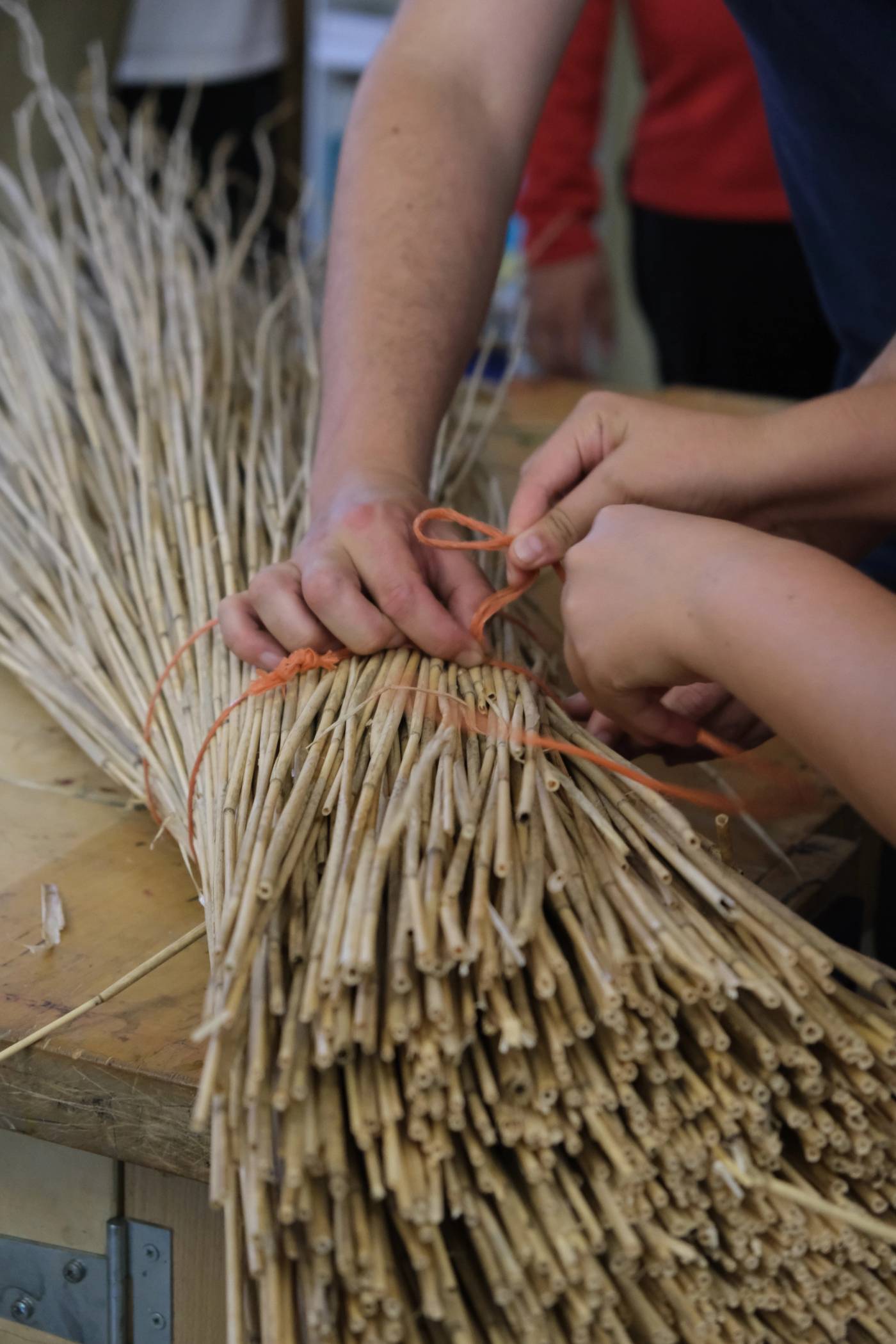
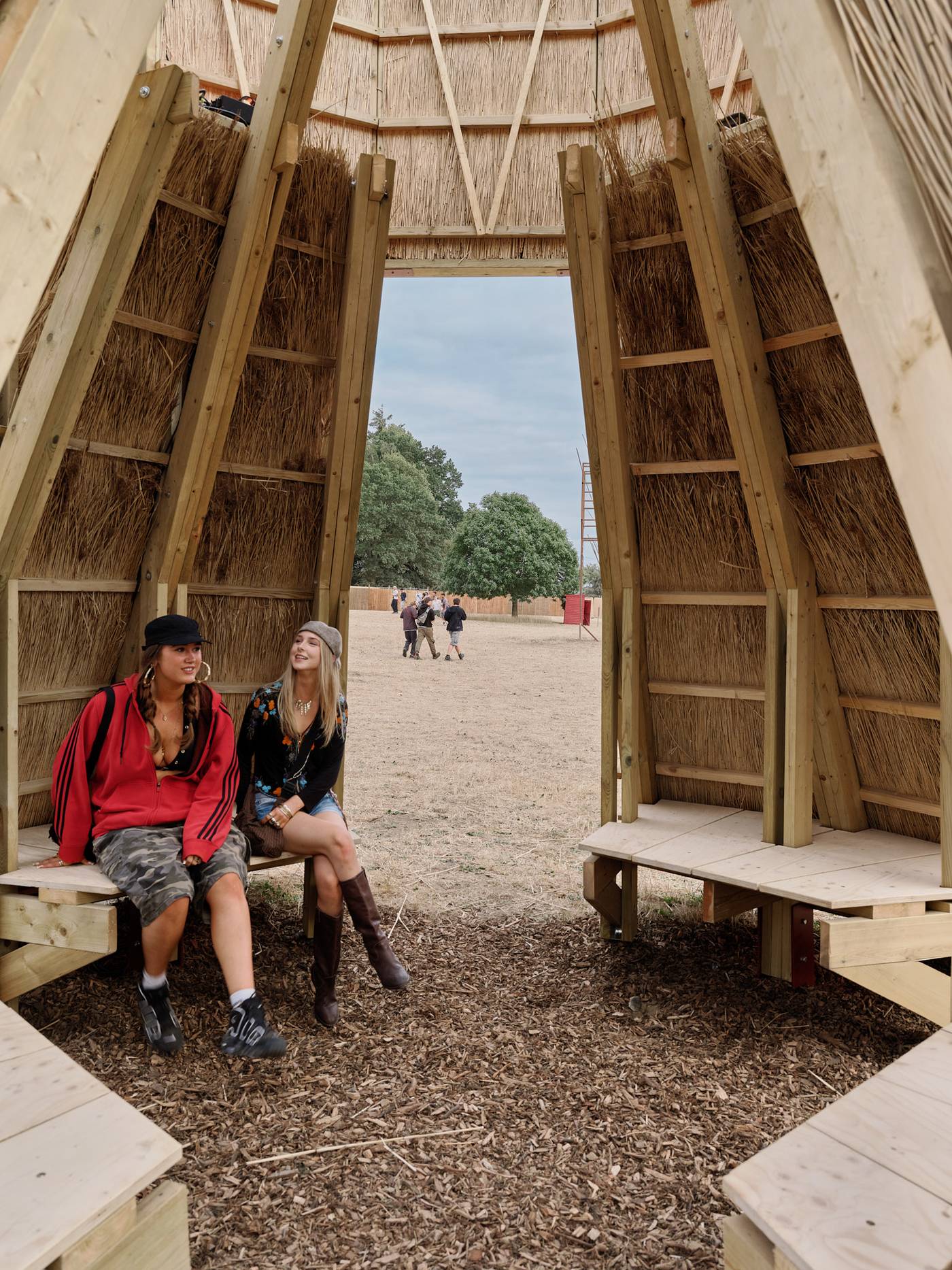
Cella Collective and Mitre and Mondays were invited by Houghton to propose a structure to the East of the site, away from the woods, on the former tantrum ground. The intention was to help balance movement across the festival and reduce pressure on both the woodland landscape and the available space within it. In response, the Water Tower’s location acts as a new point of arrival and departure. By day and night the structure provides a meeting point between The Terminus, The Quarry, and The Gramophone.
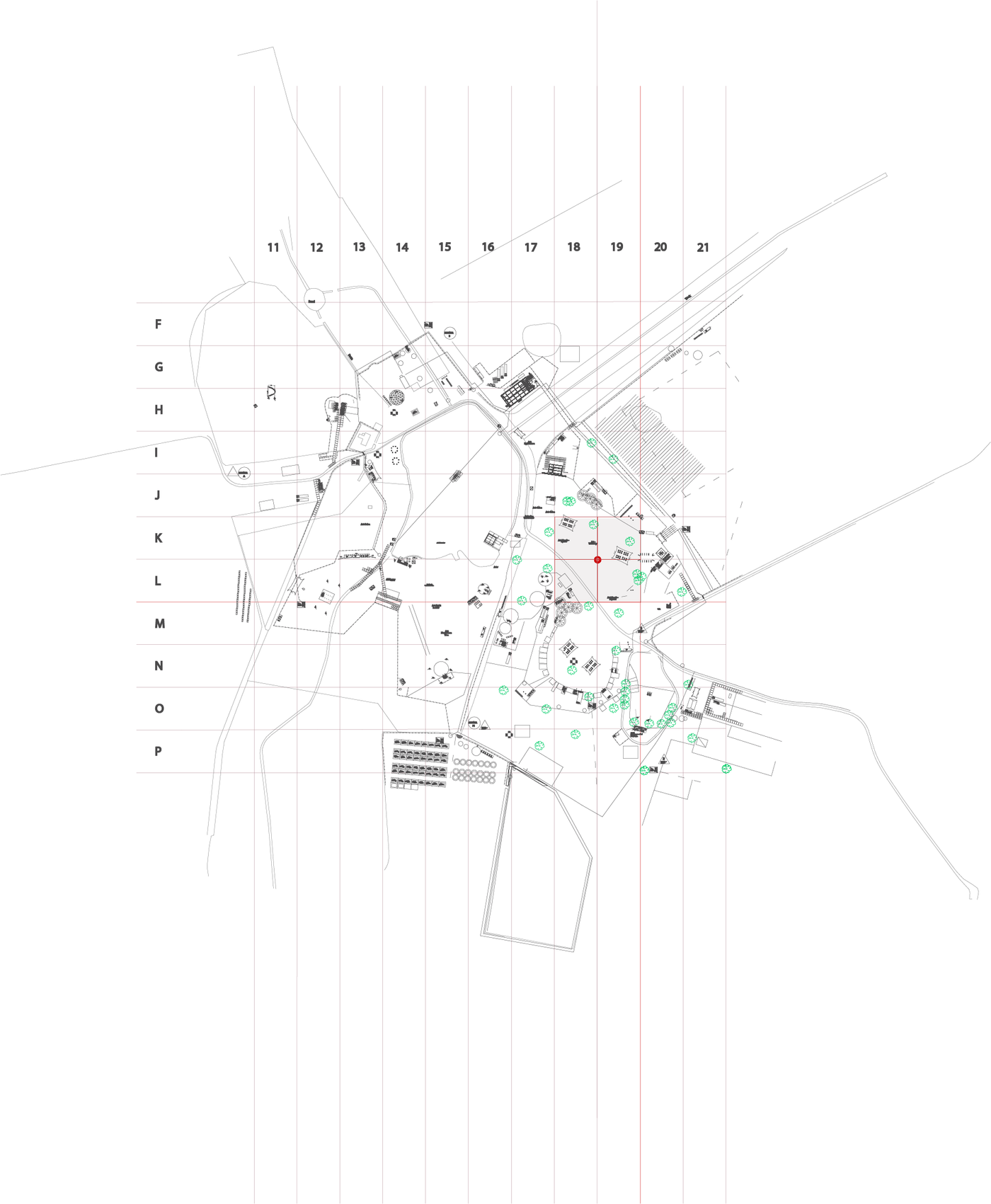

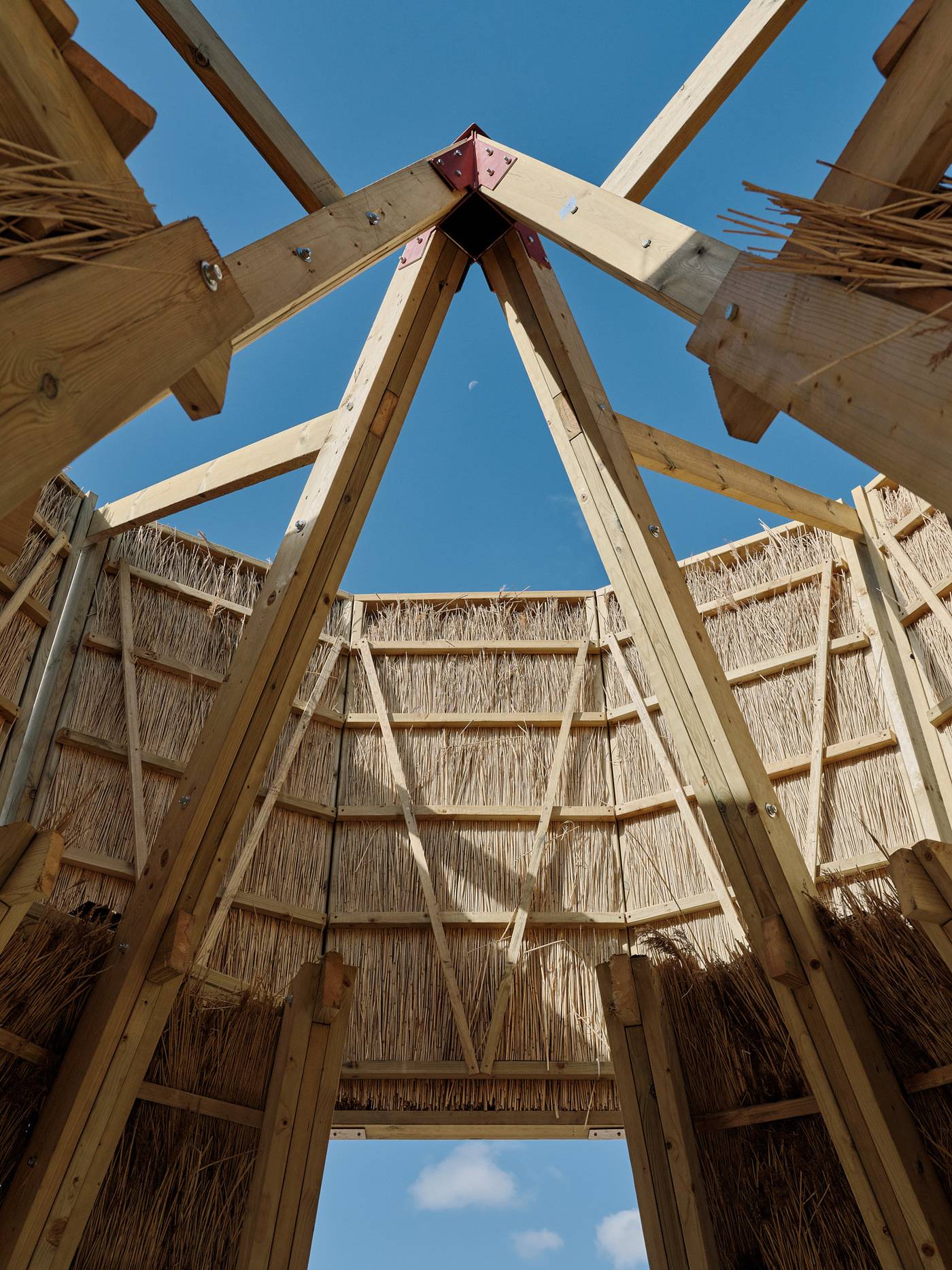
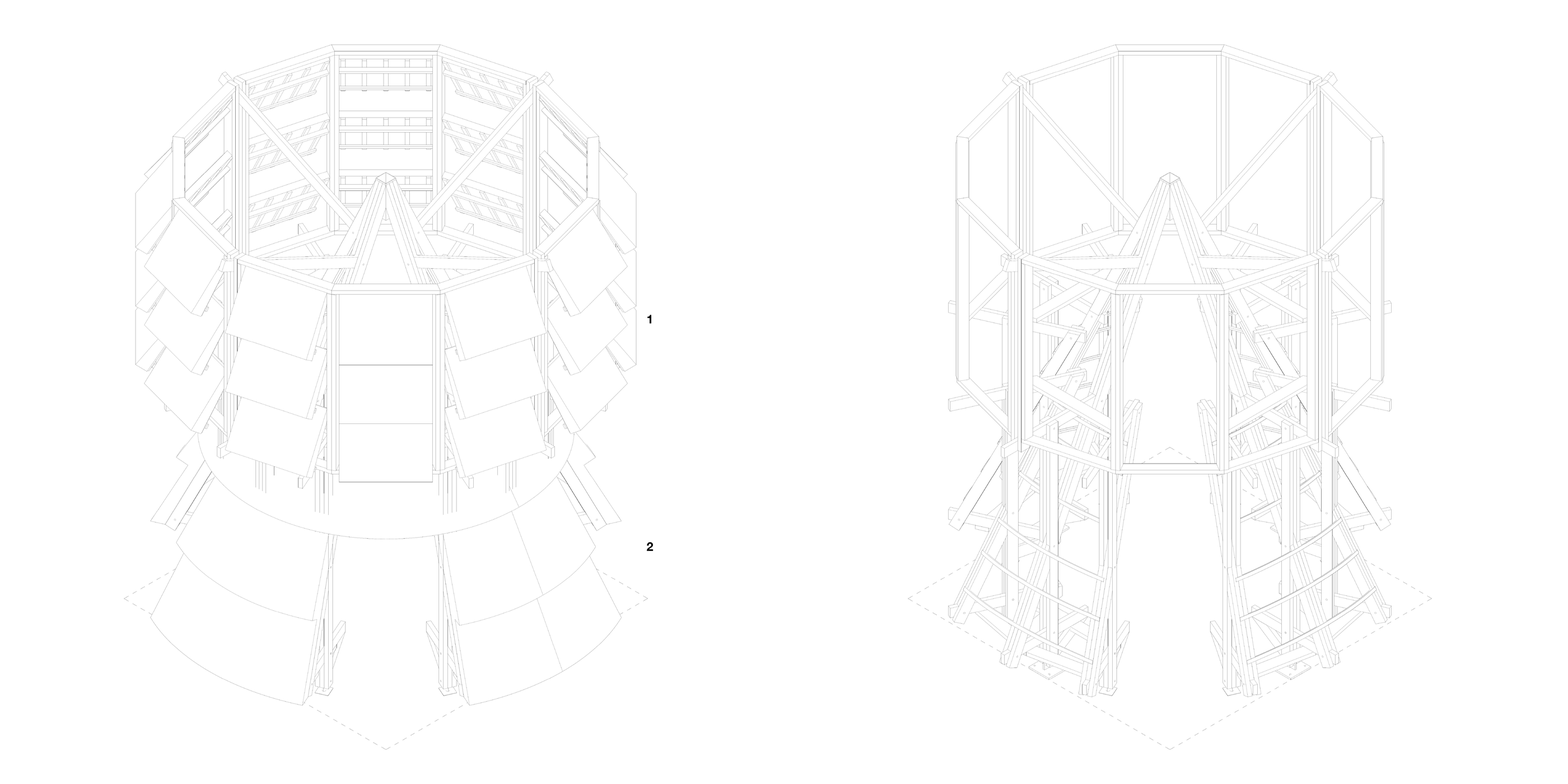

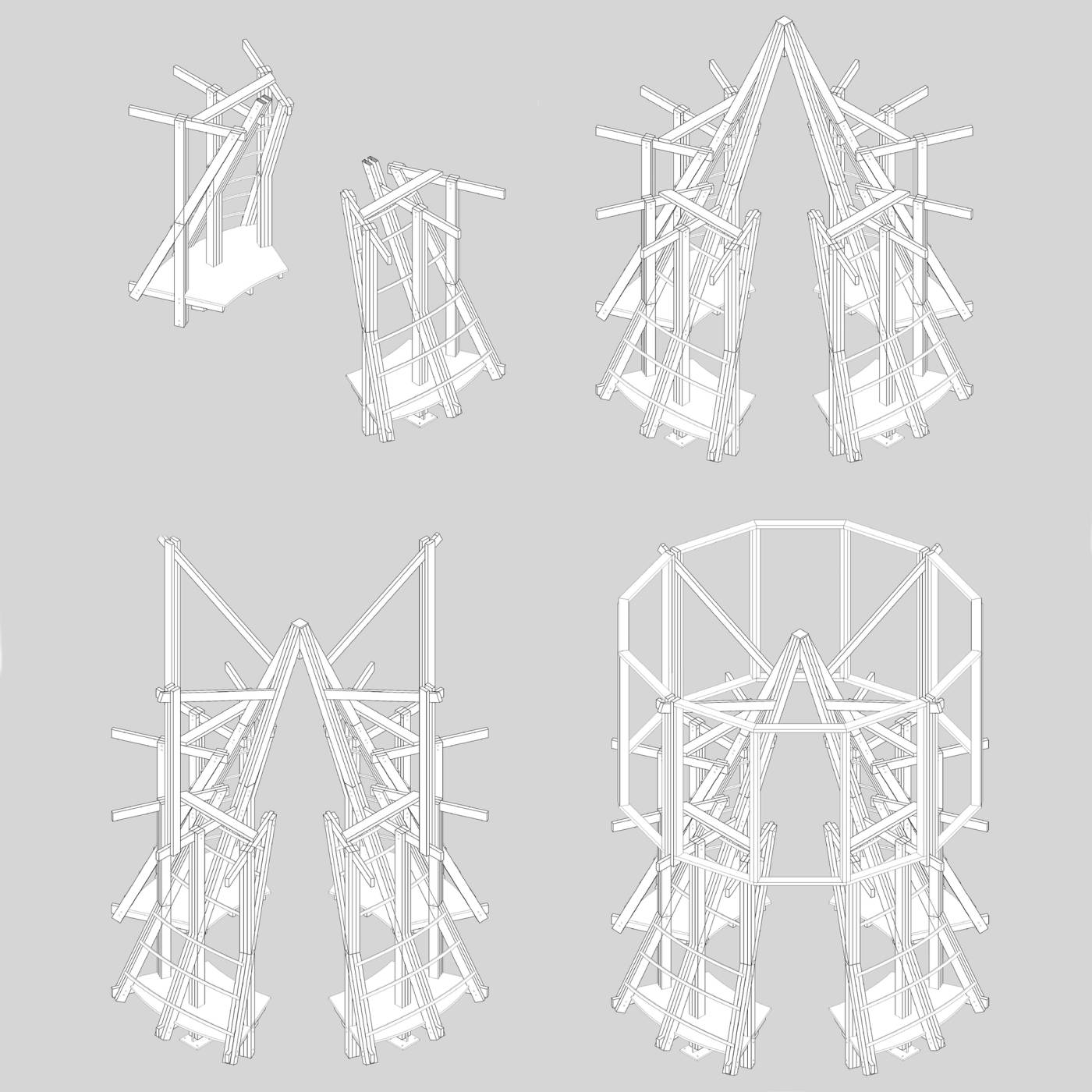
A nested hideaway from the rest of the festival, visitors are invited to enter the structure through four entrances and sit amongst the thatch on deep benches. Designed to be disassembled and reinstalled each year, the 5.5m tall Water Tower is the latest installation to become a permanent structure for the Houghton site. Four repeatable units join to create two A-Frames which are thatched in the round.

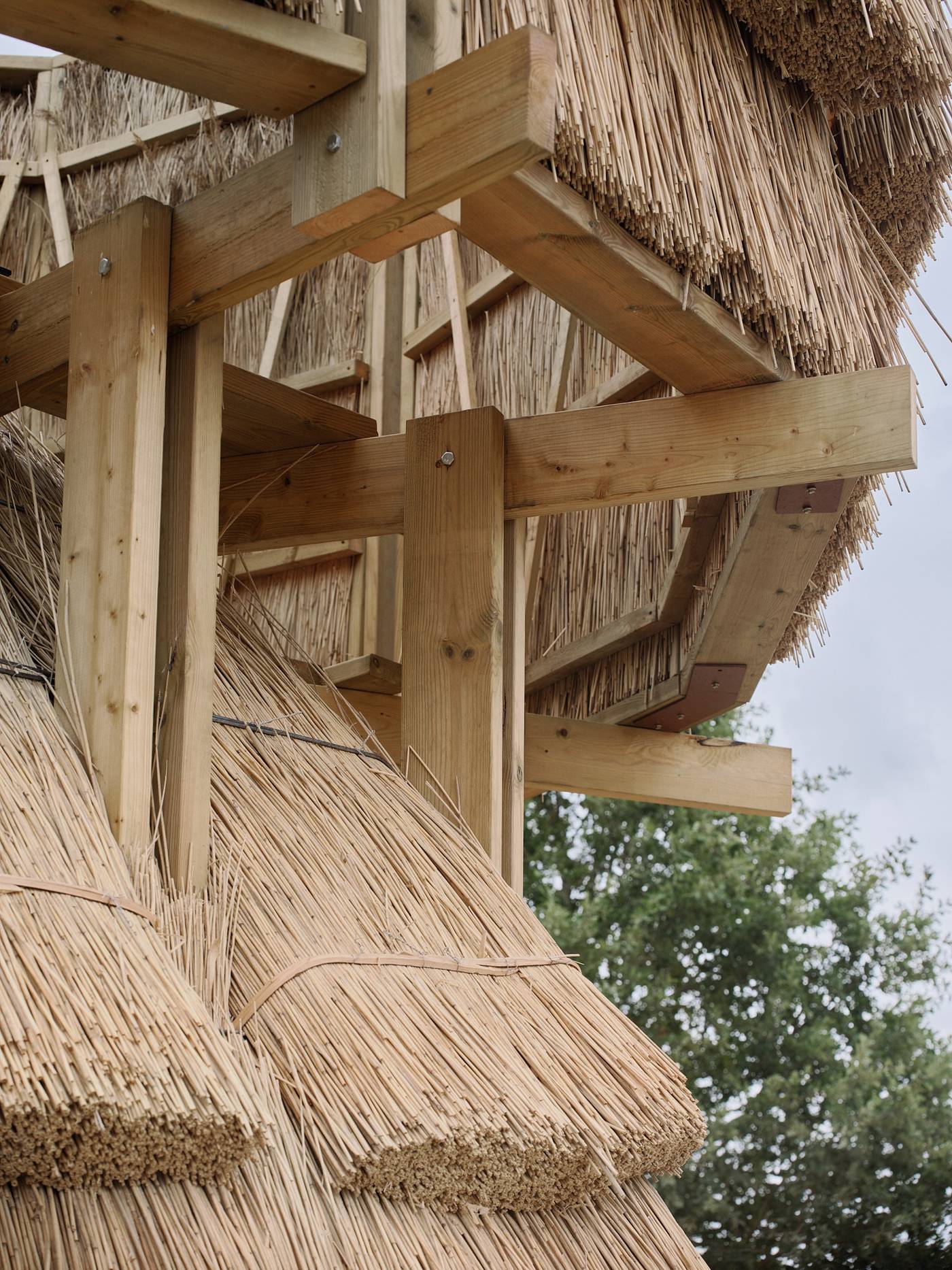
From the offset, both Cella Collective and Mitre and Mondays were motivated to design with regenerative material systems. The project specifies underused and undervalued homegrown water reed that sits in competition with imported thatch. The thatch from RSPB Tayreed is a by-product of the rotational cutting, that supports conservation strategies and creates a mosaic of habitats for all forms of wildlife.